

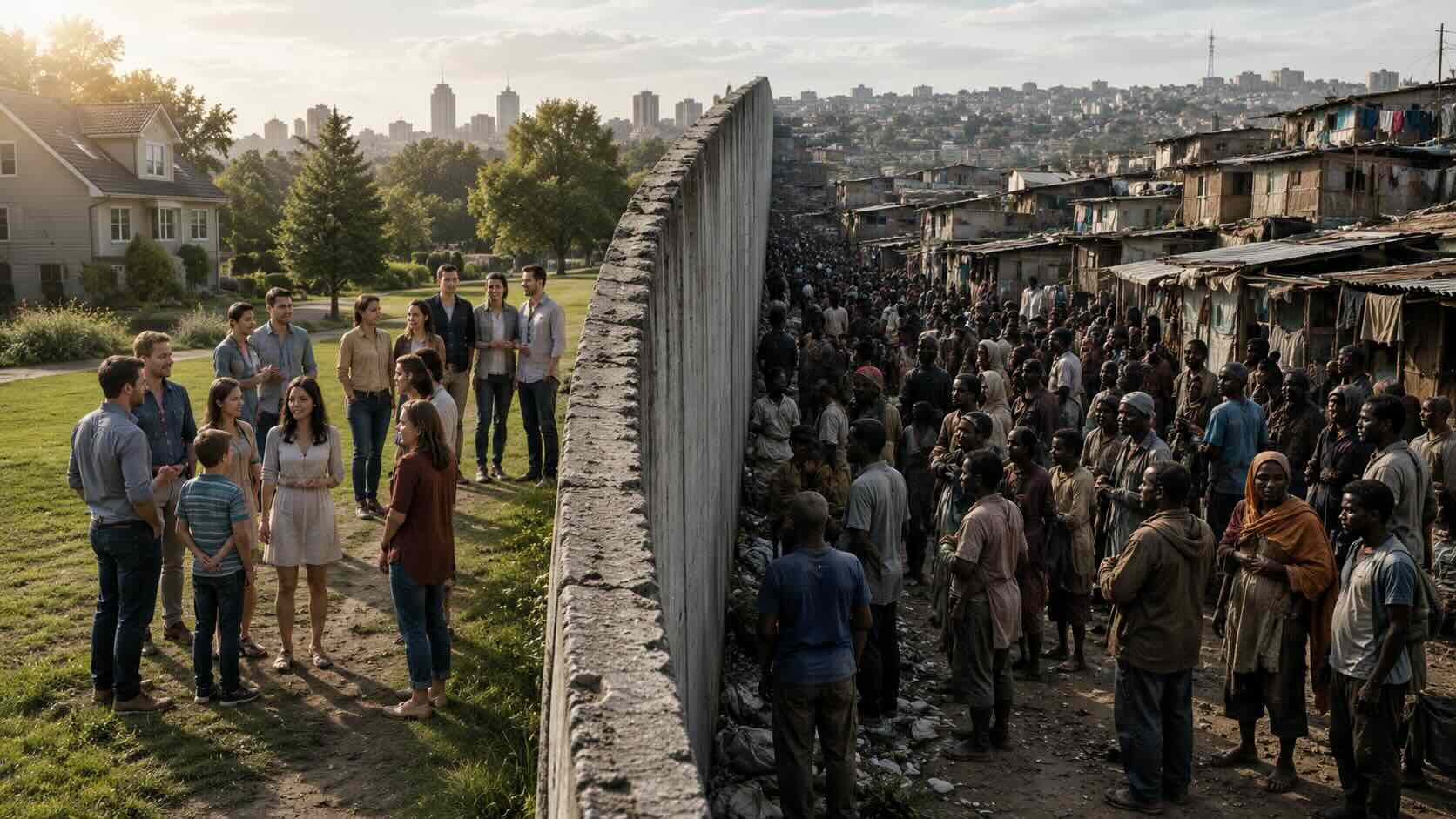
A Linguistic, Anthropological, and Ecclesiological Study of the Us and Them of the Bible
By J. Timothy Ahlen
Abstract
This study examines the widespread anthropological tendency of human societies to distinguish between insiders (“the people”) and outsiders (“the others”) and evaluates how this pattern is reflected and transformed in biblical literature. Focusing on the Hebrew terms ʿam (עם) and gôyim (גּוֹיִם), and their Greek counterparts laos (λαός) and ethnē (ἔθνη) in the Septuagint and New Testament, the article argues that Scripture both reflects and subverts this dualism. While the Old Testament often employs these terms to distinguish covenant insiders from outsiders, the New Testament redefines the people of God as a Christologically constituted, “multi-ethnē” community. This reconstitution neither preserves ethnocentric exclusivity nor entails universalism; rather, it establishes union with Christ as the sole criterion for belonging. A contemporary case study demonstrates how this theological vision can take concrete ecclesial form. The study concludes that the Great Commission calls for the formation of one people of God from all ethnē without requiring cultural homogenization.
I. Introduction
Across cultures, human communities consistently identify themselves as “the people” while distinguishing others as outsiders. This pattern reflects deep structures of identity formation embedded in worldview, language, social organization, and group survival. Anthropological research has demonstrated that these kinds of distinctions are nearly universal and are frequently encoded in ethnonyms themselves.¹ In many societies, the name a group uses for itself translates simply as “the people,” while outsiders are labeled with terms that imply inferiority, danger, exclusion, or sometimes even subhuman status. This linguistic pattern reflects not merely cultural preference but a fundamental human tendency toward setting relational boundaries that indicate “insiders” or “outsiders.”
The Hebrew Bible reflects a similar pattern in its use of ʿam (עם) and gôyim (גּוֹיִם). These terms, often translated in the Septuagint as laos (λαός) and ethnē (ἔθνη), appear at first glance to mirror the universal human distinction between insiders and outsiders. This correspondence raises an important theological question: does Scripture endorse this anthropological pattern, or does it ultimately bring correction to it?
This article makes the case that Scripture both describes and challenges insider/outsider dualism. While maintaining a meaningful distinction between those inside and outside the covenant, the New Testament redefines the people of God as a Christologically constituted, multi-ethnē community. In this reconfiguration, the defining boundary of belonging is no longer ethnicity but union with Jesus Christ. This framework rejects both ethnocentric exclusivity and universalism, maintaining a meaningful distinction between insider and outsider while redefining that distinction in theological rather than ethnic terms.
This article contributes to current missiological discussion by integrating biblical linguistic categories—particularly ʿam, gôyim, laos, and ethnē—with contemporary multi-congregational ecclesial practice. By bringing together linguistic analysis, biblical theology, and empirical ecclesial data, it seeks to demonstrate how these categories may inform the structural expression of the church in diverse cultural contexts.
II. Anthropological and Sociolinguistic Foundations
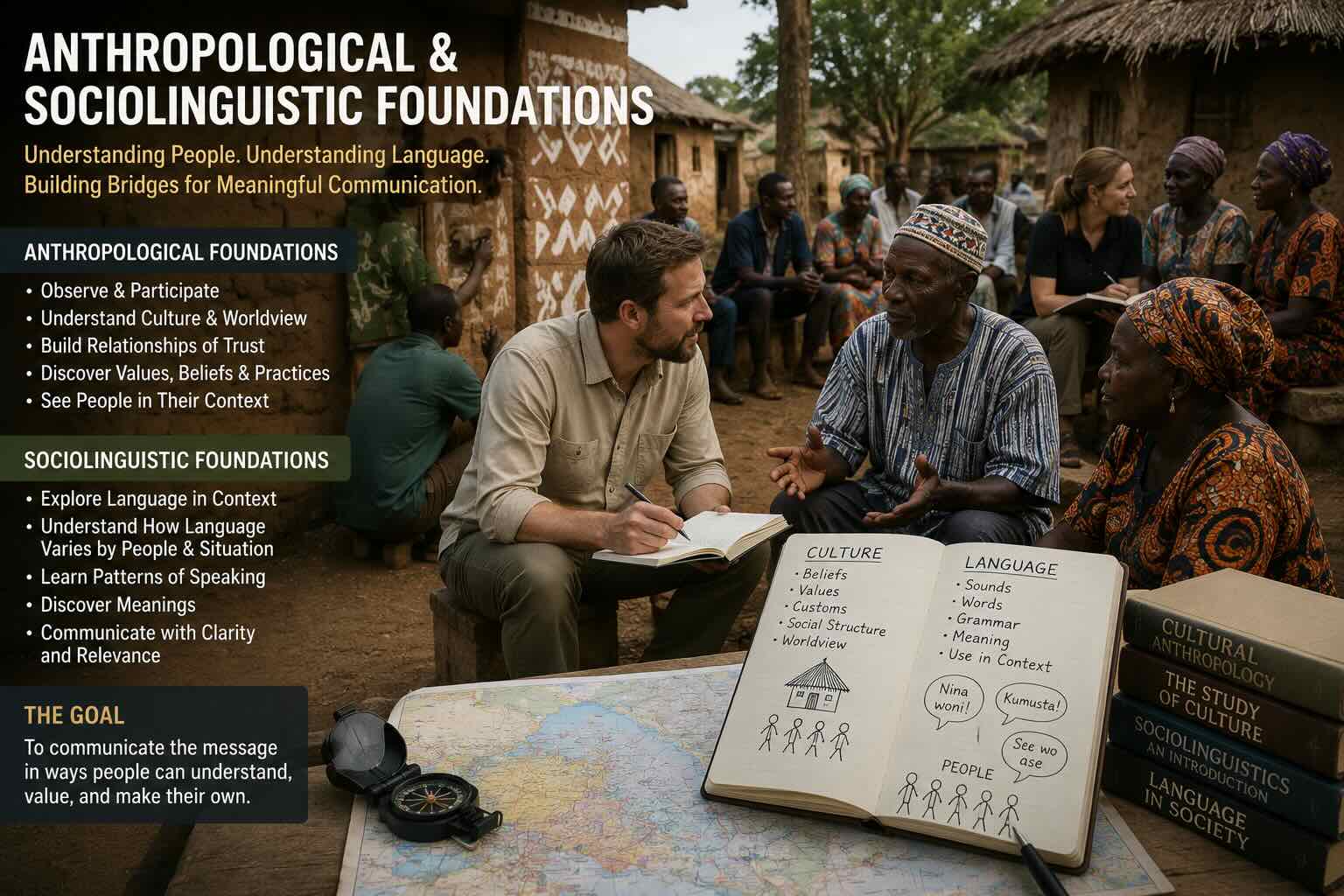
Human societies construct identity through differentiation. Fredrik Barth’s influential work on ethnic boundaries demonstrated that ethnic identity is not primarily maintained through shared cultural content but through the boundaries that distinguish one group from another.² These boundaries are socially constructed and maintained through ongoing processes of interaction, negotiation, and differentiation.
Social Identity Theory further clarifies this dynamic by demonstrating that group cohesion is reinforced through processes of categorization (“us” vs. “them”), identification (alignment with the in-group), and comparison (evaluation against out-groups).³ These processes are not incidental but foundational to human social organization. They shape how individuals understand themselves, how groups maintain cohesion, and how societies structure inclusion and exclusion.
Language plays a central role in this process. As Berger and Luckmann argue, social reality is constructed through shared systems of meaning, and language serves as a primary vehicle for this construction.⁴ Terms such as “the people” are therefore not neutral descriptors; they function as boundary markers that define who belongs and who does not. In many cases, such terms carry implicit or explicit value judgments, elevating the in-group while diminishing or dehumanizing outsiders.
This anthropological and sociolinguistic framework provides an essential lens for interpreting biblical terminology. The categories of ʿam and gôyim do not emerge in isolation; they participate in a broader human pattern of identity formation. At the same time, the biblical narrative introduces theological dimensions that both utilize and transform these categories.
III. Hebrew Lexical Analysis
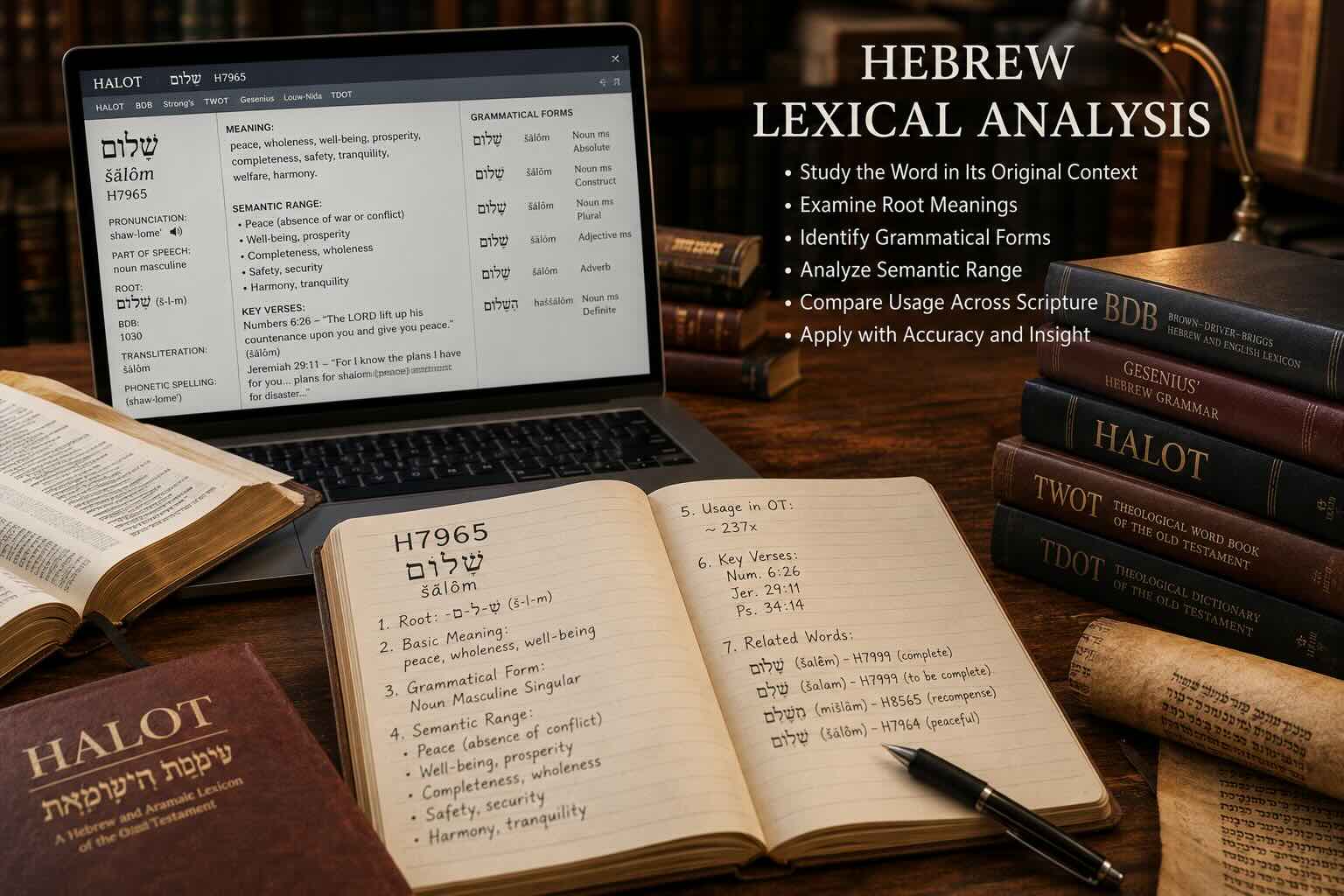
The Hebrew term ʿam (עם) denotes a people understood in relational and covenantal terms. While it can refer broadly to a kinship group or social unit, its theological significance is most clearly seen in covenantal contexts in which Israel is designated as belonging uniquely to YHWH. In passages such as Exodus 3:7 and Deuteronomy 7:6, ʿam functions not merely as an ethnic label but as a marker of divine election and covenant relationship.⁵
The term gôy (גּוֹי), plural gôyim, initially functions[1] as a neutral designation meaning “nation” or “people group.” Significantly, Israel itself is described as a gôy in Genesis 12:2, indicating that the term does not inherently carry a negative connotation. Over time, however, the plural form gôyim comes to be used predominantly to describe those outside the covenantal relationship enjoyed by Israel. In this usage, gôyim functions as a relational category, distinguishing those who are not part of the covenant people.
It is important to recognize that Hebrew and Aramaic employ a range of terms to describe collective identity. In addition to ʿam and gôy, terms such as ʿēdāh (עֵדָה, assembly) and qāhāl (קָהָל, congregation) are used to describe gatherings of people, often with specific social or religious connotations. While these terms overlap semantically, they are not interchangeable. ʿēdāh often emphasizes the gathered community, while qāhāl can refer to an assembly convened for a specific purpose, particularly in cultic or covenantal contexts.
Within this broader lexical field, ʿam emerges as the primary covenantal designation for the people of YHWH. The distinction between ʿam and gôyim is therefore not merely linguistic but theological. It reflects a relational reality grounded in covenant rather than a simple ethnic or political distinction.
The Septuagint’s rendering of ʿam as laos and gôyim as ethnē should therefore be understood as an interpretive act. It translates not only words but theological categories, establishing a conceptual framework that will shape New Testament usage.
IV. Septuagint Evidence

The Septuagint (LXX) provides the indispensable linguistic and theological bridge between the Hebrew Scriptures and the Greek-speaking world of early Christianity. Its translation choices are not merely lexical but interpretive, shaping how Hebrew theological categories are expressed and understood in a new linguistic environment.
In covenantal contexts, the Hebrew term ʿam (עם) is consistently rendered as laos (λαός). This pattern is especially evident in passages such as Exodus 3:7 (“I have indeed seen the misery of my people”) and Deuteronomy 7:6 (“you are a people holy to the Lord your God”), where laos functions as a technical designation for the covenant people of YHWH. The consistency of this translation suggests that laos becomes, within the Greek Old Testament, a theologically charged term denoting not merely a population but a people defined by divine relationship.⁶
Similarly, the Hebrew term gôyim (גּוֹיִם) is most often translated as ethnē (ἔθνη). Like its Hebrew counterpart, ethnē carries a broad semantic range. It may refer neutrally to nations (e.g., Genesis 10), negatively to those who oppose God (e.g., Psalm 2), or positively to those who are included within God’s redemptive purposes (e.g., Isaiah 49:6).⁷ This semantic flexibility allows the term to function both descriptively and theologically, depending on context.
The translation pattern of ʿam → laos and gôyim → ethnē establishes a conceptual framework that is carried forward into the New Testament. While not without exceptions, this pattern is sufficiently consistent to provide a meaningful distinction between the covenant people (laos) and the nations (ethnē). It is within this inherited framework that the New Testament’s reconfiguration of these categories must be understood.
V. Greek Terminology for “People” and Its Theological Significance
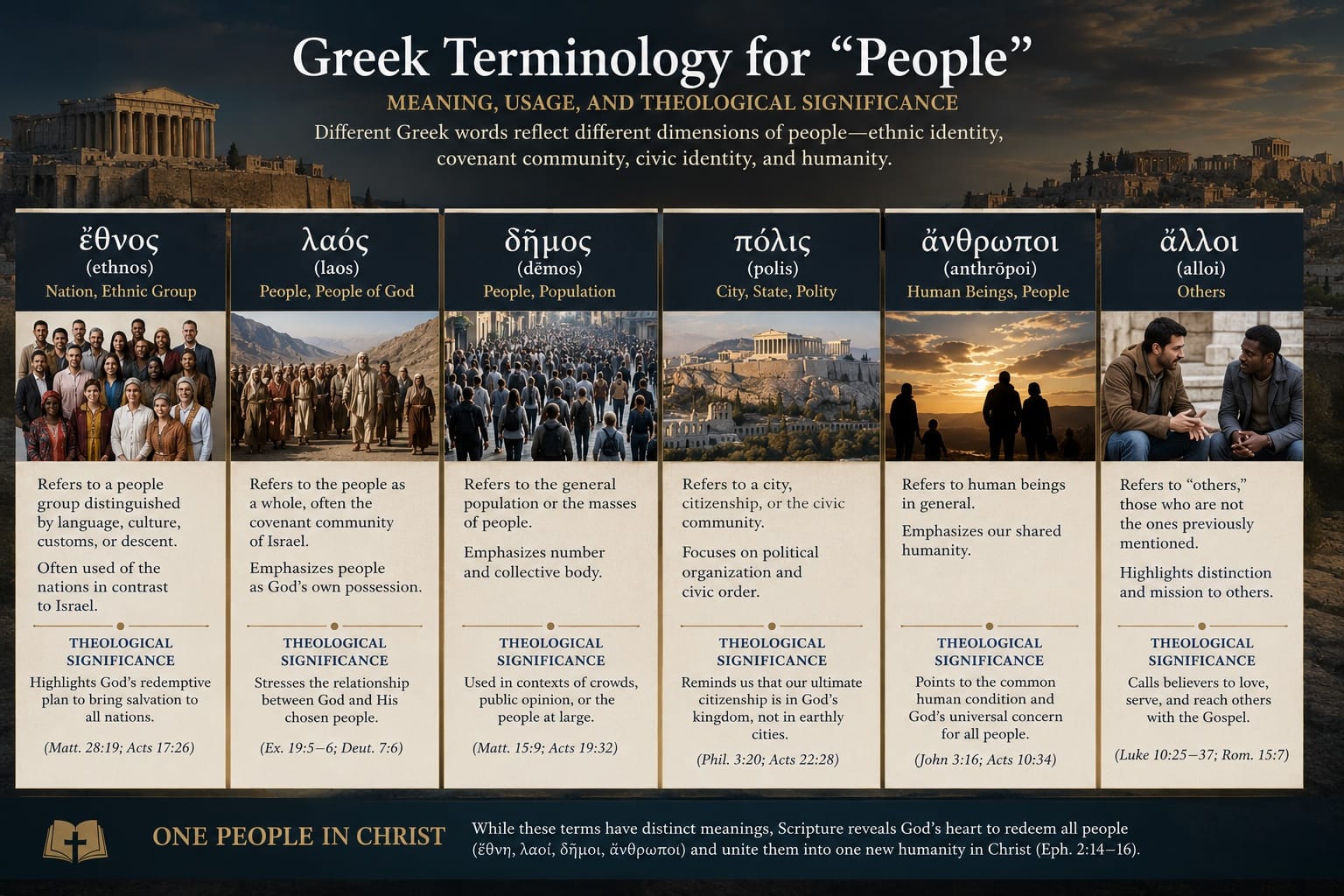
A fuller understanding of the New Testament’s use of laos and ethnē requires situating these terms within the broader semantic field of Greek terminology for human groupings. Ancient Greek employs a rich vocabulary to describe different forms of collective identity, each term carrying distinct social, political, and cultural connotations.
The term dēmos (δῆμος) refers primarily to the body of citizens within a defined political territory. It is inherently civic and political, often used in contrast to aristocratic elites. Identity within the dēmos is tied to participation in the life of the polis (πόλις), the city-state, which represents the fundamental political unit of classical Greek society. Closely related is politeia (πολιτεία), which denotes citizenship, civic identity, or constitutional structure. These terms reflect a framework in which belonging is grounded in political participation and territorial association.
By contrast, ethnos (ἔθνος) refers to a people defined by shared customs, cultural practices, and way of life. It is less tied to formal political structures and more closely associated with kinship, language, and cultural continuity. In classical usage, ethnos could refer broadly to any people group, including both Greeks and non-Greeks. However, within the Septuagint and New Testament, it frequently functions as a designation for the nations in distinction from the covenant people of God.
The term laos (λαός) occupies a distinct semantic space. In classical Greek, it can refer broadly to the populace or masses, sometimes in contrast to political elites. However, within the Septuagint, laos undergoes a significant theological specialization. It becomes the primary designation for the covenant people of YHWH, carrying strong relational and theological connotations. This usage is consistently maintained in the New Testament, where laos refers to the people of God rather than to a merely political or ethnic grouping.
Other Greek terms further illustrate the diversity of the lexical field. The term ochlos (ὄχλος) refers to a crowd or mass of people, often lacking cohesion or stable identity and sometimes carrying a pejorative nuance. Terms such as phylon (φῦλον) and phylē (φυλή) denote tribal or kinship-based groupings, while koinon (κοινόν) refers to federated political alliances or confederations of city-states. None of these terms carry the same theological weight as laos within the biblical tradition.
The New Testament’s consistent preference for laos and ethnē, rather than political or civic terminology such as dēmos or polis, is therefore highly significant. It indicates that the identity of the people of God is not grounded in political structures, territorial boundaries, or civic participation. Instead, it is defined relationally and theologically.
This lexical pattern is not incidental but foundational, providing the conceptual framework through which the New Testament redefines the people of God as a Christologically constituted laos drawn from all ethnē.
VI. New Testament Reconfiguration
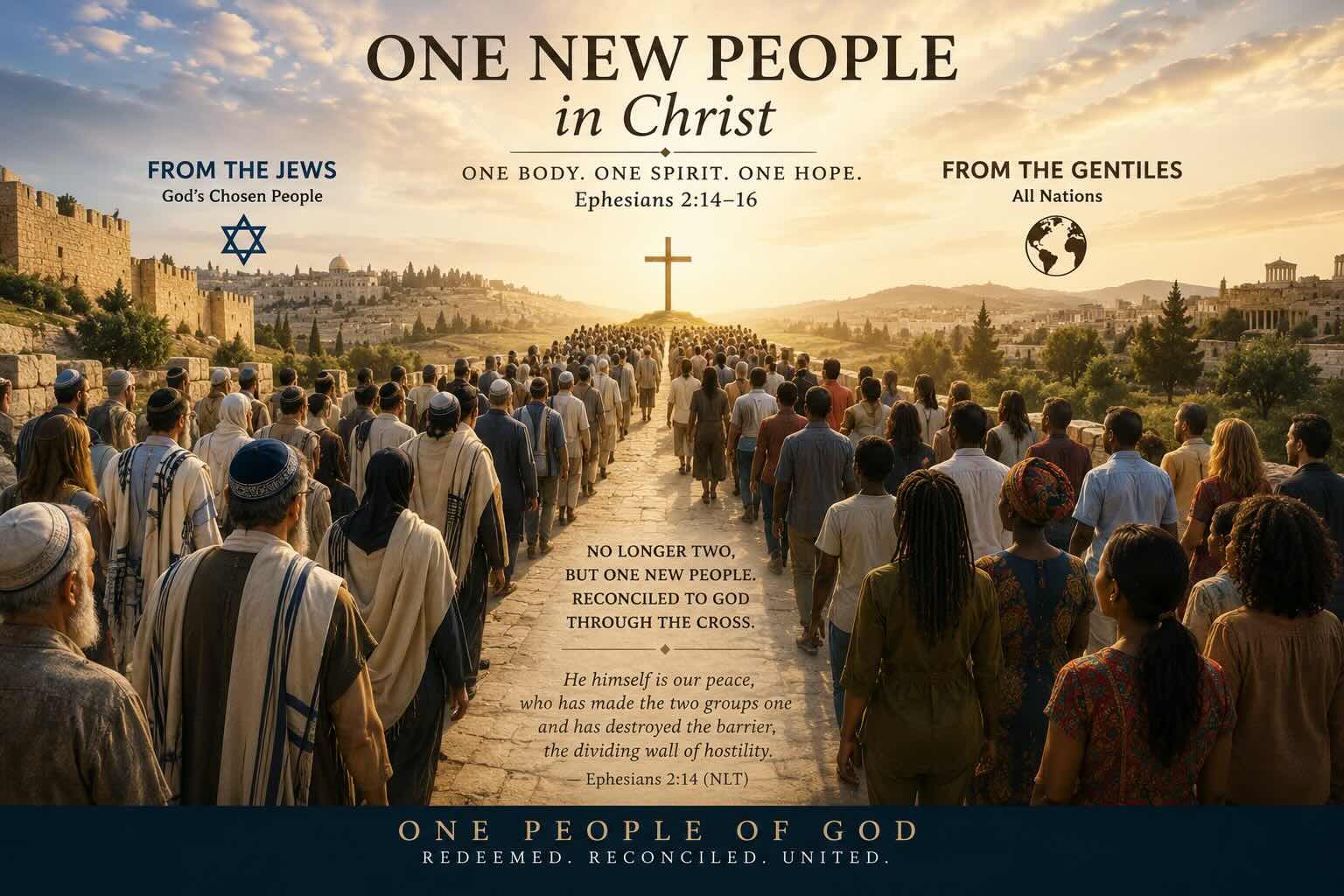
The New Testament inherits the linguistic framework established by the Septuagint but reconfigures it decisively in light of the person and work of Jesus Christ. The distinction between laos and ethnē is no longer grounded in ethnicity but in relationship to Christ.
This transformation is most clearly articulated in Ephesians 2:11–22. In this passage, Paul addresses Gentile believers who were formerly “excluded from citizenship in Israel and foreigners to the covenants of the promise.” Through Christ, however, those who were once “far away” have been “brought near.” Christ is described as having “destroyed the barrier, the dividing wall of hostility,” creating “one new humanity” (ἕνα καινὸν ἄνθρωπον) out of the two.
This language reflects both continuity and discontinuity. There is continuity in that the people of God remain rooted in the covenantal purposes of God revealed in the Old Testament. There is discontinuity in that the defining boundary of this people is no longer ethnic or national but Christological. The distinction between Jew and Gentile is not erased as a sociocultural reality, but it is rendered irrelevant as a criterion for covenant membership.
At this point, it is necessary to engage alternative interpretations. Some scholars, particularly within supersessionist traditions, argue that the church replaces Israel as the new laos, effectively collapsing the distinction between Israel and the nations into a single undifferentiated category.⁸ While this perspective rightly emphasizes the centrality of Christ, it risks flattening the ongoing biblical witness to the presence of the ethnē, particularly in eschatological texts such as Revelation 7:9.
Conversely, pluralist or inclusivist approaches tend to universalize the people of God by minimizing the necessity of explicit faith in Christ.⁹ In such frameworks, the distinction between insider and outsider is effectively dissolved. While these perspectives rightly resist ethnocentric restriction, they do so at the expense of the New Testament’s consistent insistence that union with Christ constitutes the decisive boundary of belonging.
The present study rejects both reductions. It affirms instead that the people of God are neither ethnically bounded nor universally coextensive with humanity. Rather, they are constituted through faith in Christ across all ethnē. This reconfiguration preserves the distinction between insider and outsider while redefining it in Christological terms.
VII. The Great Commission and the Ethnē
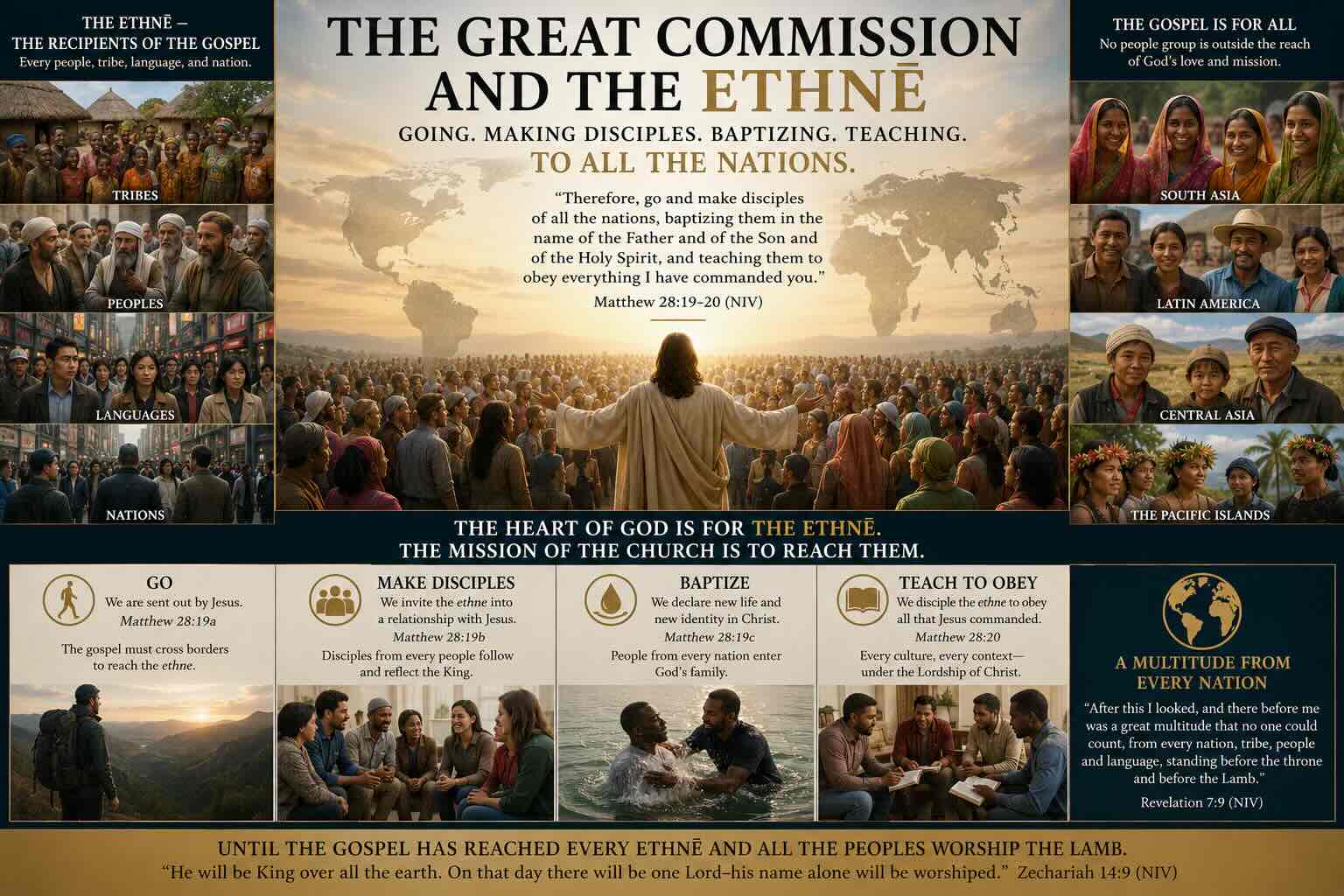
The phrase panta ta ethnē (πάντα τὰ ἔθνη) in Matthew 28:19 is best understood as referring to ethnolinguistic peoples rather than modern nation-states. This interpretation aligns with the semantic range of ethnē and with the broader biblical narrative in which God’s redemptive purposes extend to distinct peoples rather than abstract political entities.¹⁰
A close examination of the Greek grammar of Matthew 28:19–20 clarifies the structure of the command. The primary verb is the aorist imperative μαθητεύσατε (“make disciples”), which carries the force of the command. The participle πορευθέντες (“going” or “as you go”) is subordinate, while βαπτίζοντες (“baptizing”) and διδάσκοντες (“teaching”) describe the means by which disciple-making is accomplished. The object of the imperative, πάντα τὰ ἔθνη, indicates that the focus of the command is not merely individual conversion but the discipling of identifiable peoples.¹¹
This grammatical structure underscores that the Great Commission is oriented toward the formation of communities of disciples within each ethnos. It moves beyond a model of isolated evangelistic encounters toward a vision of sustained discipleship that results in the establishment of communities of obedience.
VIII. The Great Commission in the Canonical Narrative
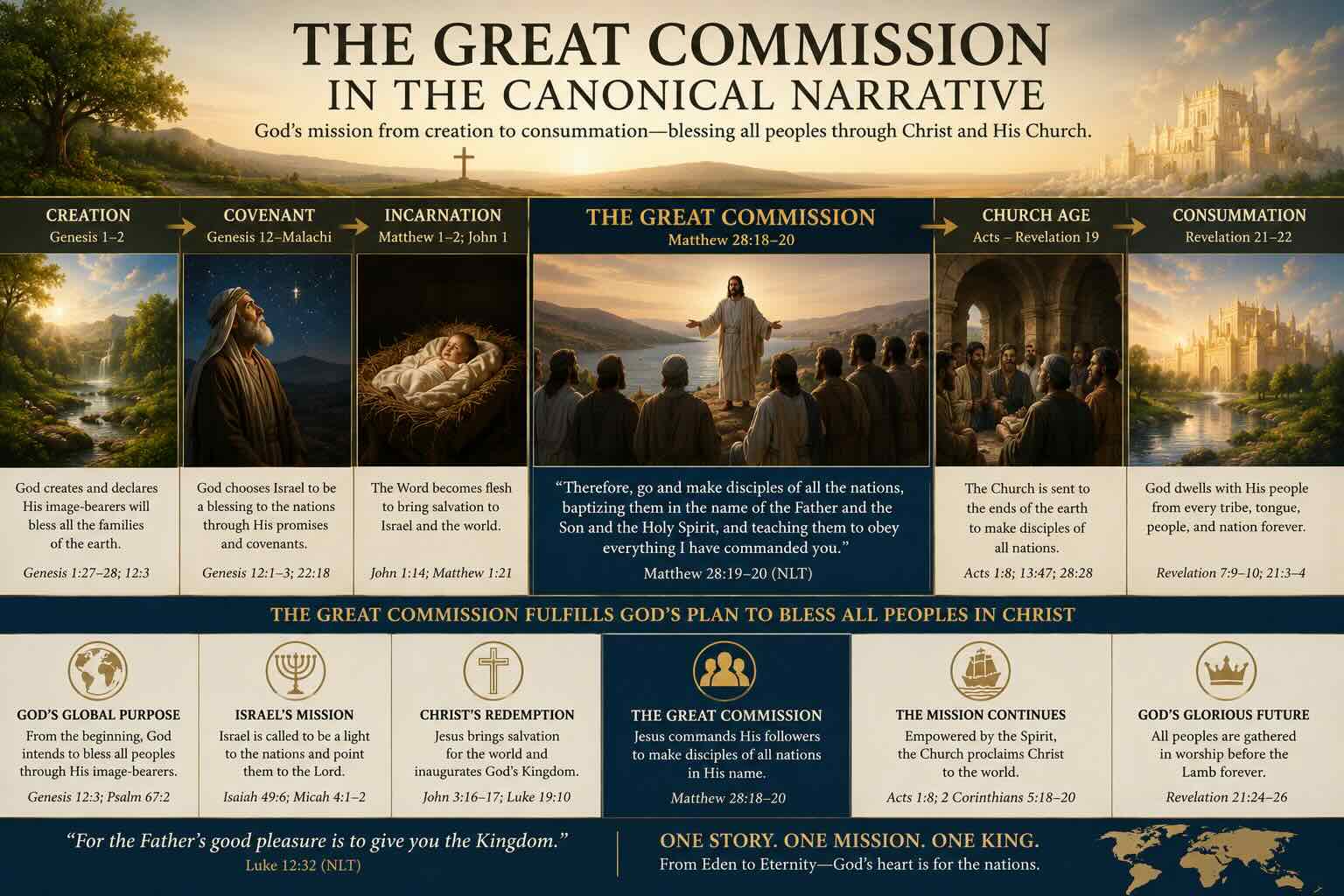
The Great Commission should not be understood as an isolated command given at the conclusion of the Gospel of Matthew, but as the culmination of a trajectory that extends throughout the entire biblical narrative. The mandate to engage all ethnē is deeply rooted in the Old Testament and consistently reaffirmed across the New Testament.
The Abrahamic covenant provides the foundational framework for this trajectory. In Genesis 12:1–3, God promises not only to make Abraham into a great nation but also that “all peoples on earth will be blessed through you.” From the outset, therefore, the covenant people (ʿam) are constituted not for themselves alone but as a conduit through which divine blessing extends to all nations.
This outward orientation is repeatedly affirmed throughout the Old Testament. The Psalms call upon the nations to acknowledge the reign of God (Psalm 67:3–5), while the Prophets envision a future in which the nations are gathered into the worship of YHWH (Isaiah 49:6; Jeremiah 1:5–10). These texts demonstrate that the inclusion of the nations is not a late development but an integral aspect of God’s redemptive purpose.
In the New Testament, this trajectory is expressed in multiple complementary forms. The Great Commission appears not only in Matthew 28:18–20 but also in Mark 16:15–18, Luke 24:46–49, John 20:21–23, and Acts 1:8. Each of these passages emphasizes different dimensions of the mission—proclamation, repentance, witness, and sending—yet all converge on the inclusion of the nations.
This trajectory reaches its theological climax in Revelation 7:9, where a great multitude “from every nation, tribe, people and language” stands before the throne of God. Significantly, this vision does not depict the erasure of ethnic identity but its inclusion within a unified act of worship. The ethnē are not dissolved but redeemed.
Taken together, this canonical witness confirms that the Great Commission is not an isolated directive but the culmination of a consistent biblical narrative. The distinction between ʿam and gôyim, mediated through laos and ethnē, is not abolished but fulfilled in the formation of a multi-ethnic people of God in Christ.
IX. Reconstituting the People of God
In this study, laos is understood as the ecclesial people of God constituted in Christ rather than as an ethnically bounded community.
The central claim of this study is that neither ʿam nor gôyim inherently defines the people of God in the New Testament. Instead, union with Christ constitutes the sole boundary of belonging. This represents a decisive theological reconfiguration of the categories inherited from the Old Testament and mediated through the Septuagint.
This claim must be articulated carefully in order to avoid two common distortions. On the one hand, the redefinition of the people of God in Christ does not entail universalism. Not all humanity is automatically included within the people of God. The New Testament consistently affirms that inclusion in this people is contingent upon faith in Jesus Christ. The distinction between insider and outsider is therefore retained, but it is relocated from the realm of ethnicity to that of Christological allegiance.
On the other hand, this framework decisively rejects ethnocentrism. No single ethnos functions as the normative or privileged expression of the people of God. The covenant community is no longer defined by participation in a particular ethnic lineage or cultural form. Instead, it is constituted through union with Christ and expressed across a plurality of ethnolinguistic contexts.
This reconstitution results in what may be described as a “unity-in-diversity” ecclesial reality. The people of God are one laos, yet this laos is composed of many ethnē. Each ethnos retains its linguistic and cultural distinctiveness while participating fully in the shared identity of the people of God.
This theological framework also clarifies the relationship between continuity and discontinuity in the biblical narrative. There is continuity in that the people of God remain a distinct community defined by relationship to God. There is discontinuity in that the basis of that relationship is no longer tied to ethnic identity or covenantal law but to union with Christ.
X. Ecclesiological Implications
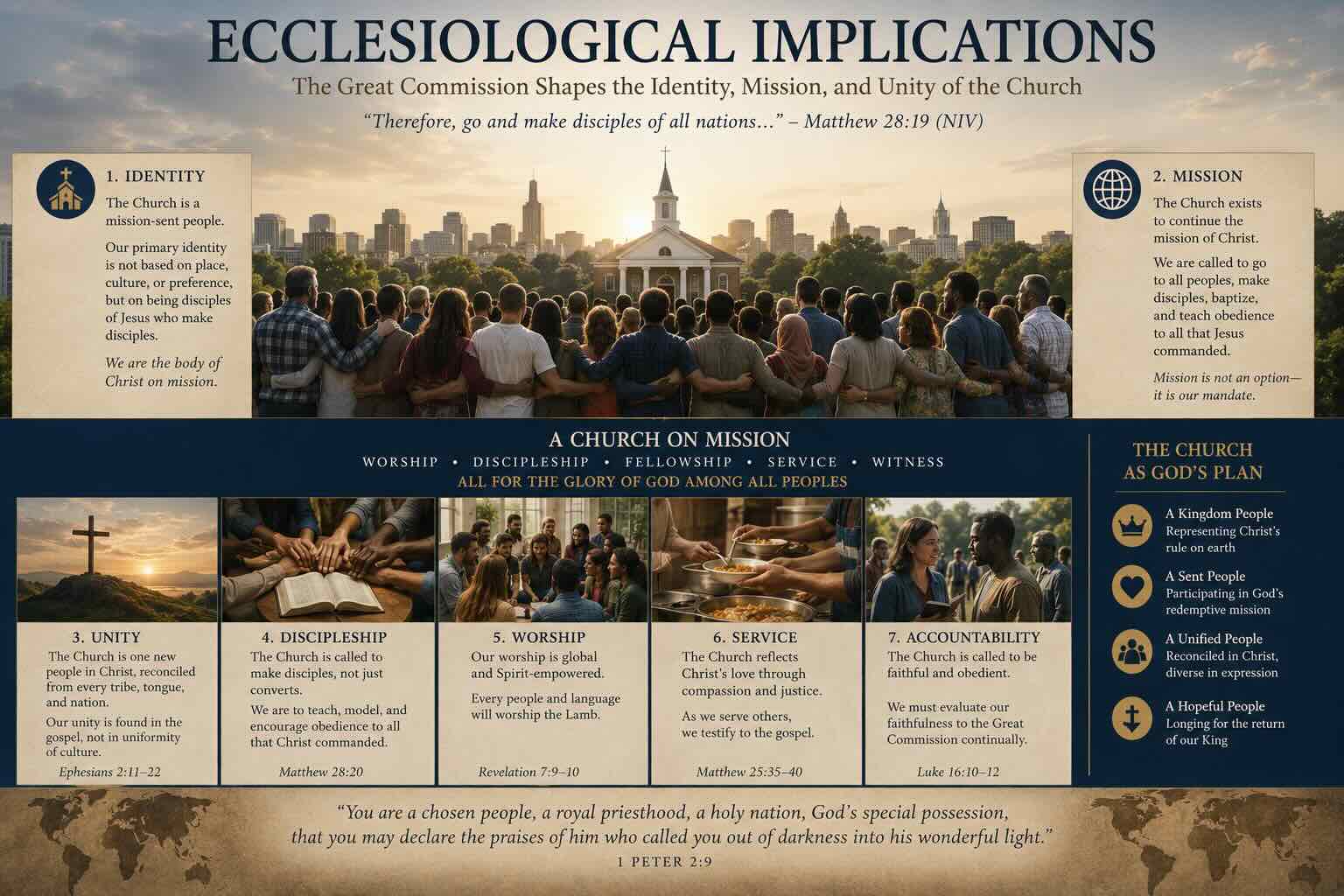
If the church is one laos drawn from many ethnē, then its structure must reflect both unity and diversity. This has significant implications for ecclesiology, particularly in multicultural and global contexts.
Contemporary missiological scholarship has increasingly recognized that ecclesial structures must be capable of accommodating ethnolinguistic diversity without requiring cultural assimilation.¹² The traditional model of a single, culturally uniform congregation is often insufficient in contexts characterized by significant linguistic and cultural plurality.
Instead, the church may be more faithfully expressed as a network of congregations, each rooted within a particular ethnolinguistic community yet united by shared faith in Christ. In such a model, unity is not achieved through uniformity but through relational and theological coherence.
This approach aligns with the pattern observed in the New Testament, where the gospel takes root within diverse cultural contexts without requiring those contexts to be abandoned. The Jerusalem church, the Antioch church, and the various Pauline communities all exhibit distinct cultural characteristics while sharing a common identity in Christ.
The implication is that ecclesial forms should be flexible and contextually responsive, allowing the gospel to be embodied within each ethnos. This does not imply theological relativism; rather, it reflects the conviction that the gospel transcends culture while also being expressed through culture.
XI. Case Study: Forest Meadow Baptist Church
The theological framework articulated in this study finds concrete expression in the ministry of Forest Meadow Baptist Church (FMBC) in Dallas, Texas. This case provides an empirical example of how the reconstitution of the people of God as a multi-ethnic laos drawn from many ethnē can be embodied within a local ecclesial structure.
Originally established in 1972 as a traditional Anglo Southern Baptist congregation, FMBC experienced a period of growth followed by significant decline due to demographic changes and internal challenges. By the early 2000s, the congregation had diminished to a small core and faced the possibility of closure.
The subsequent reorientation of the church’s mission was shaped by a recognition of the changing demographics of its surrounding community. Within a one-and-a-half-mile radius of the church facility, more than one hundred distinct ethnolinguistic groups were represented. This context rendered traditional approaches to church growth—focused on a single cultural demographic—both impractical and ineffective.
In response, FMBC adopted a strategy centered on identifying “persons of peace” within various communities. Rather than targeting specific groups through predetermined programs, the church allowed ministry expansion to emerge organically through relational networks. This approach resulted in the formation of multiple congregations representing diverse ethnē, including Hispanic, Sudanese, Nepali, and other communities.
Over time, these efforts produced a network of congregations that extended beyond the immediate context of FMBC. The movement associated with the church resulted in the establishment of numerous congregations across multiple generations of church multiplication.
A defining characteristic of this development is that ethnolinguistic identity was retained rather than suppressed. In many cases, new congregations were formed within existing relational and linguistic networks, allowing the gospel to be communicated and embodied within familiar cultural frameworks.
The Sudanese ministry provides a particularly instructive example. Initial efforts to create a unified, multi-tribal congregation proved unsustainable due to deeply embedded tribal identities. Over time, this led to the formation of multiple congregations aligned along tribal lines. This development demonstrates that ethnolinguistic identity remains a primary vehicle for discipleship and that attempts to suppress such identity in favor of artificial unity may hinder rather than advance the formation of mature Christian communities.
At the same time, these congregations remained connected through shared faith in Christ, illustrating a model of unity that does not depend on cultural uniformity. This reflects precisely the theological claim advanced in this study: one laos composed of many ethnē.
This case study also reveals the diversity of methodologies through which the gospel can be transmitted across ethnolinguistic boundaries. Some groups employed structured church-planting strategies resulting in rapid multiplication. Others developed more traditional congregational forms. Still others adopted decentralized house church models. This diversity underscores the principle that no single methodological approach is universally normative; rather, methods must be adapted to the cultural and relational dynamics of each ethnos.
While this case study is illustrative rather than exhaustive, it provides a concrete example of how the theological principles articulated in this study can be implemented in practice.
XII. Conclusion
The biblical narrative reflects a universal human tendency to divide humanity into insiders and outsiders, yet it ultimately transforms this distinction through the work of Christ. The categories of ʿam and gôyim, mediated through laos and ethnē, are not discarded but reconfigured.
In the New Testament, the people of God are no longer defined by ethnicity but by union with Christ. This redefinition avoids both ethnocentric exclusivity and universalism, establishing a community that is both bounded and inclusive. The boundary is real, but it is Christological rather than ethnic.
The Great Commission calls for the formation of one laos drawn from all ethnē. This vision is not one of cultural homogenization but of unity in diversity—a people composed of many peoples, each retaining its distinct identity while participating fully in the life of Christ.
This vision is not merely theoretical. As the case study demonstrates, it can be embodied in concrete ecclesial structures that reflect the theological reality of the gospel. In a world marked by division and fragmentation, the church is called to embody a different kind of community: one that reflects the reconciling work of Christ across all boundaries.
___________________________
Bibliography
Ahlen, J. Timothy and J.V. Thomas. One Church, Many Congregations: The Key Church Strategy. Nashville: Abingdon Press, 1999.
Barth, Fredrik. Ethnic Groups and Boundaries: The Social Organization of Culture Difference. Boston: Little, Brown, 1969.
Berger, Peter L., and Thomas Luckmann. The Social Construction of Reality: A Treatise in the Sociology of Knowledge. New York: Anchor Books, 1966.
Bosch, David J. Transforming Mission: Paradigm Shifts in Theology of Mission. Maryknoll, NY: Orbis Books, 1991.
Guder, Darrell L., ed. Missional Church: A Vision for the Sending of the Church in North America. Grand Rapids: Eerdmans, 1998.
Hiebert, Paul G. Anthropological Insights for Missionaries. Grand Rapids: Baker Book House, 1985.
Koehler, Ludwig, and Walter Baumgartner. The Hebrew and Aramaic Lexicon of the Old Testament. Leiden: Brill, 2001.
Louw, Johannes P., and Eugene A. Nida. Greek-English Lexicon of the New Testament Based on Semantic Domains. New York: United Bible Societies, 1989.
Newbigin, Lesslie. The Gospel in a Pluralist Society. Grand Rapids: Eerdmans, 1989.
Pinnock, Clark H. A Wideness in God’s Mercy. Grand Rapids: Zondervan, 1992.
Piper, John. Let the Nations Be Glad!. Grand Rapids: Baker Academic, 2010.
Schnabel, Eckhard J. Early Christian Mission. Downers Grove, IL: InterVarsity Press, 2004.
Silva, Moisés. Biblical Words and Their Meaning. Grand Rapids: Zondervan, 1994.
Soulen, R. Kendall. The God of Israel and Christian Theology. Minneapolis: Fortress Press, 1996.
Tajfel, Henri. Human Groups and Social Categories. Cambridge: Cambridge University Press, 1981.
Volf, Miroslav. Exclusion and Embrace. Nashville: Abingdon Press, 1996.
Wright, Christopher J. H. The Mission of God. Downers Grove, IL: InterVarsity Press, 2006.
Wright, N. T. The New Testament and the People of God. Minneapolis: Fortress Press, 1992.
From ʿAm to Panta ta Ethnē End Notes
- Fredrik Barth, Ethnic Groups and Boundaries: The Social Organization of Culture Difference (Boston: Little, Brown, 1969), 15–16; Paul G. Hiebert, Anthropological Insights for Missionaries (Grand Rapids: Baker Book House, 1985), 31–35.
- Barth, Ethnic Groups and Boundaries, 18–19.
- Henri Tajfel, Human Groups and Social Categories: Studies in Social Psychology (Cambridge: Cambridge University Press, 1981), 255–276.
- Peter L. Berger and Thomas Luckmann, The Social Construction of Reality: A Treatise in the Sociology of Knowledge (New York: Anchor Books, 1966), 130–146.
- Ludwig Koehler and Walter Baumgartner, The Hebrew and Aramaic Lexicon of the Old Testament, trans. and ed. M. E. J. Richardson (Leiden: Brill, 2001), s.v. “עם”; Christopher J. H. Wright, The Mission of God: Unlocking the Bible’s Grand Narrative (Downers Grove, IL: InterVarsity Press, 2006), 264–268.
- Johannes P. Louw and Eugene A. Nida, Greek-English Lexicon of the New Testament Based on Semantic Domains (New York: United Bible Societies, 1989), 11.58.
- Moisés Silva, Biblical Words and Their Meaning: An Introduction to Lexical Semantics (Grand Rapids: Zondervan, 1994), 102–107.
- R. Kendall Soulen, The God of Israel and Christian Theology (Minneapolis: Fortress Press, 1996), 51–56.
- Clark H. Pinnock, A Wideness in God’s Mercy: The Finality of Jesus Christ in a World of Religions (Grand Rapids: Zondervan, 1992), 98–103.
- Eckhard J. Schnabel, Early Christian Mission, vol. 1 (Downers Grove, IL: InterVarsity Press, 2004), 58–60; John Piper, Let the Nations Be Glad!: The Supremacy of God in Missions, 3rd ed. (Grand Rapids: Baker Academic, 2010), 178–182.
- Daniel B. Wallace, Greek Grammar Beyond the Basics (Grand Rapids: Zondervan, 1996), 640–645; Craig S. Keener, The Gospel of Matthew: A Socio-Rhetorical Commentary (Grand Rapids: Eerdmans, 2009), 718–722.
- David J. Bosch, Transforming Mission: Paradigm Shifts in Theology of Mission (Maryknoll, NY: Orbis Books, 1991), 447–452; Darrell L. Guder, ed., Missional Church: A Vision for the Sending of the Church in North America (Grand Rapids: Eerdmans, 1998), 183–187.